
Why Is My Roof Leaking? The Most Common Causes
By the CRS Roofing & Construction team — Amarillo, TX
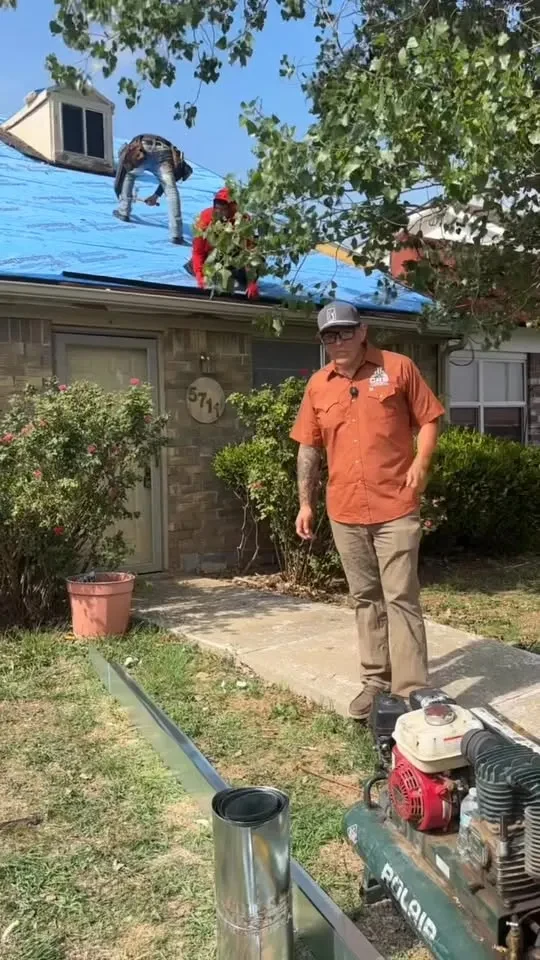
A roof leaks when water gets past the roofing system at a weak point, and in the Texas Panhandle those weak points are almost always the same handful of spots: failed flashing, a cracked pipe boot, missing or damaged shingles, a worn valley, attic condensation, aged underlayment, or fresh storm damage. The open field of shingles rarely leaks on its own. The transitions and penetrations do. This guide walks through the most common causes, explains how a leak travels before it ever shows up on your ceiling, and tells you when a stain is worth a phone call.
What Are the Most Common Causes of a Roof Leak?
Most leaks trace back to one of seven culprits. Flashing failures around chimneys and walls lead the list, because that bent metal is what seals every joint where the roof meets something else. Crackedpipe boots are a close second, since the rubber collar around a vent pipe bakes and splits in the sun. After that come missing or damaged shingles from wind, clogged or worn valleys where water concentrates, condensation from an attic that cannot breathe, agedunderlayment that has lost its water resistance, and outright storm damage from hail. Knowing the short list is half the battle, because it tells an inspector where to look first.
How Does Water Travel Before It Shows Up Inside?
This is the part that fools most homeowners. Water enters high on the roof, then runs down thedecking or along a rafter until it hits a seam, a nail, or a light box and drips through. By then it can be feet away from where it got in. A stain over the living room might come from a chimney on the other side of the attic. That is why chasing a leak from the ceiling almost never works, and why patching the drywall without finding the source just moves the problem. A real diagnosis starts at the stain and works uphill to the actual entry point.
Why Does Flashing Cause So Many Leaks?
Flashing seals the breaks in the roof, and breaks are where water wants in. Around a chimney, along a sidewall, or in a valley, the smooth slope stops and a joint begins, and only metal flashing keeps that joint dry. When the metal rusts, lifts in the wind, gets dented by hail, or was faked with a bead of caulk, water slips behind it. The single most useful thing to understand about leaks is that one near a chimney or an exterior wall is a flashing problem far more often than a shingle problem. Our guide onroof flashing covers the types, and the companion page on aroof leak around the chimney digs into the leakiest feature of all.
Can Shingles and Pipe Boots Leak on Their Own?
They can, and both are common. Wind peels up or tears off shingles, hail bruises and cracks them, and years of sun make them brittle until they curl and let water under. Once a shingle is gone or lifted, the layer beneath takes the water directly. Pipe boots fail a different way: the rubber collar that hugs the vent pipe dries out and splits, usually years before the shingles wear out, and water runs straight down the pipe into the ceiling. If you want to know what each shingle symptom means, read our guide onmissing, curling, or buckling shingles, and if you are seeing grit in your gutters, see what granule loss is telling you.
Do Clogged Valleys and Poor Ventilation Cause Leaks?
Both do, and both get overlooked. A valley carries water off two slopes into one narrow channel, so when it fills with leaves and debris or its metal wears thin, that concentrated flow backs up and finds the seam. Poor attic ventilation causes a leak that is not really a leak at all: warm, moist air with nowhere to go condenses on the cold underside of the decking and drips like rain. Homeowners swear the roof is leaking when the real problem is the attic cannot breathe. Both are worth checking before you assume the shingles are the issue, and both show up clearly in a thoroughroof inspection.
Is a Roof Leak Always From a Storm?
No, and that surprises people. Plenty of leaks have nothing to do with weather. A dried-out pipe boot, a rusted flashing joint, or attic condensation will leak on a calm day, slowly and quietly, until a ceiling stain finally shows. Storm leaks are the loud ones: hail cracks the shingle surface and wind tears pieces loose, so the roof starts letting water in after a specific event. Knowing which kind you have matters, because storm damage may be an insurance claim while an aged part is a simple repair. Our guide onwhat hail damage looks like on a roof shows the patterns that point to a storm cause.
Could a Sagging Roof Be Behind the Leak?
Sometimes the leak is a symptom of something larger. A roof that dips or sags along the ridge or between rafters can mean the decking has rotted from a long-running leak, or that the structure underneath is stressed. That is no longer a simple repair, and it should be looked at promptly by a professional rather than patched over. If your roofline is no longer straight, read our guide onwhat causes a sagging roof and have it inspected before a storm loads it further. A sagging roof deck is one of the few roofing problems that can get worse fast.
When Should You Call a Roofer About a Leak?
Call right away for an active drip during a storm, water near light fixtures or wiring, or a ceiling that is sagging and holding water. Those are safety issues. For a faint stain that is not actively dripping, you do not need to panic, but you should still get it inspected soon, because even a slow leak rots decking and ruins insulation the longer it runs. The cheap fix today prevents the expensive repair later. Aroof repair that catches a bad boot or a lifted flashing early is a fraction of the cost of replacing soaked decking and drywall.
The Bottom Line
If your roof is leaking, the cause is almost certainly one of a short list, and it is almost certainly not the open shingle field. Flashing, pipe boots, shingles, valleys, ventilation, underlayment, and storm damage account for the vast majority of leaks in Panhandle homes, and water tends to travel before it shows itself, which is why finding the source takes a trained eye. CRS Roofing & Construction traces a leak to where it actually starts and fixes that, instead of chasing the stain. To understand the whole system, start with our parts of a roof guide. For storm-related damage, see ourstorm damage repair page. For a leak you cannot find, call(806) 290-0639 or book afree roof inspection.
Roof Leak FAQ
Why is my roof leaking?
Most roof leaks start at a weak point in the roofing system rather than in the open field of shingles. The usual causes are failed flashing around chimneys and walls, cracked pipe boots on vent pipes, missing or damaged shingles after wind, clogged or worn valleys, condensation from poor attic ventilation, aged underlayment, and storm damage from hail. Finding which one failed is the whole job, because the stain inside rarely sits under the actual entry point.
Where do most roof leaks start?
They start at the transitions and penetrations, not the open slope. Flashing around chimneys and sidewalls, the pipe boots around plumbing vents, and the valleys where two slopes meet are the leakiest parts of any roof. Flat shingle field sheds water well on its own. The breaks in that field are where water finds a way in.
How do I find where a roof leak is coming from?
Start inside by noting where the stain appears, then look uphill, because water almost always enters higher up and runs down the decking or a rafter before it drips. Check the nearest chimney, wall, or vent pipe first, since those are the common sources. Many entry points are only visible up close on the roof, which is why a professional inspection traces the path rather than guessing from the ceiling.
Can a roof leak without a storm?
Yes. A cracked pipe boot, a worn valley, a rusted flashing joint, or attic condensation from poor ventilation can all leak with no storm involved. These are slow, quiet leaks that show up as a growing ceiling stain or a musty attic. They often do more hidden damage than a storm leak because they run unnoticed for months.
Is a leaking roof an emergency?
An active drip during a storm, water near light fixtures or wiring, or a sagging, bulging ceiling is an emergency and needs a call right away. A faint stain that is not actively dripping is not an emergency, but it should still be inspected soon, because even slow leaks rot decking and ruin insulation over time. When in doubt, get it looked at before the next storm.
Does one leak mean I need a new roof?
Usually not. A single leak from a cracked boot, a loose flashing, or a few wind-torn shingles is a routine repair, not a replacement. A new roof becomes the honest answer when leaks are widespread, the shingles are worn out across the whole roof, or the decking below has rotted. A good inspection tells you which situation you are in instead of selling you the bigger job.
Get a Free Roof Inspection
Tell us about your roof and we'll get back to you fast — usually the same day.