
What Hail Damage Looks Like on a Roof
By the CRS Roofing & Construction team — Amarillo, TX
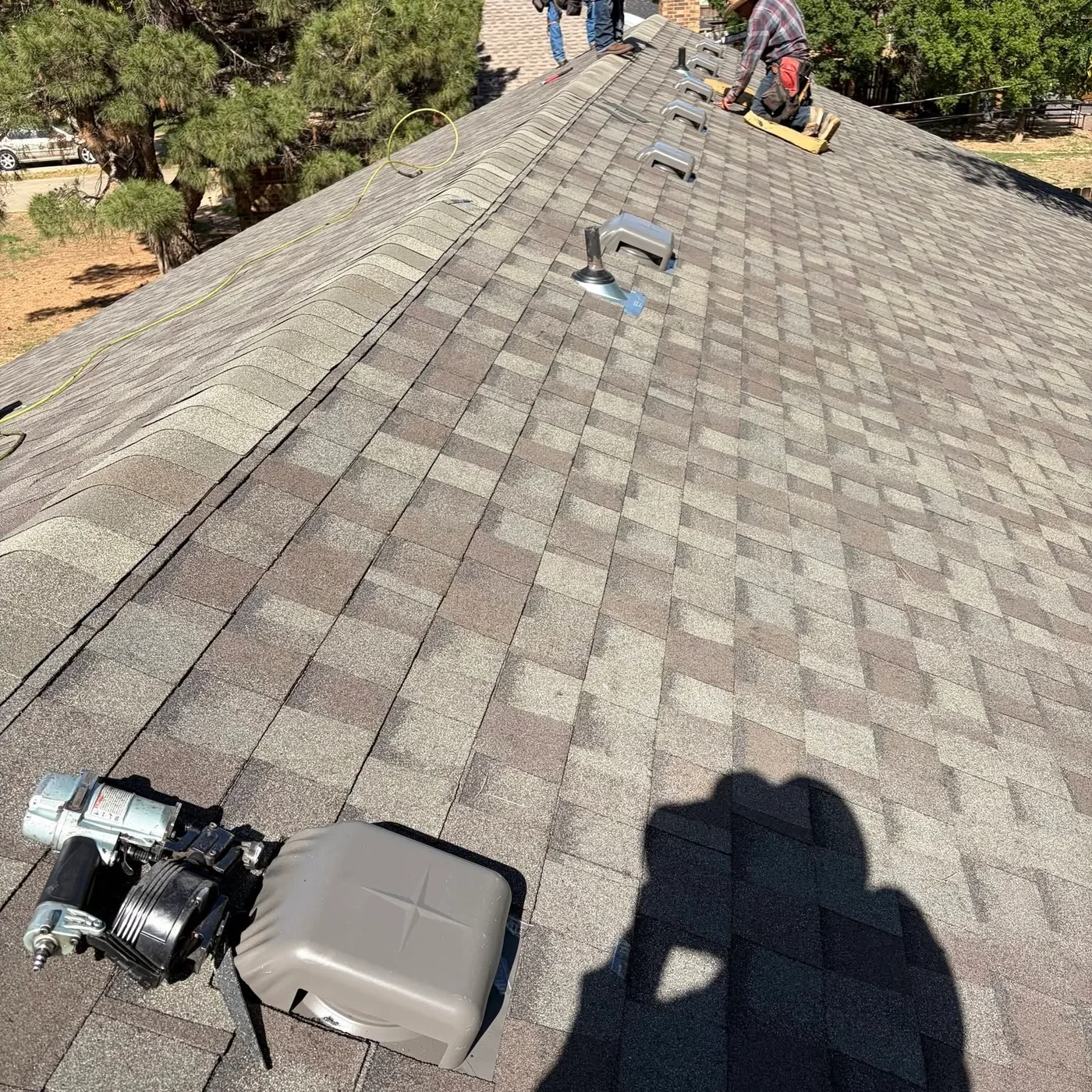
Hail damage rarely looks like a hole. It looks like bruises, missing granules, and small dents scattered with no pattern. Most of it is invisible from the driveway. This guide shows what real hail damage looks like on a roof, how to tell it from normal wear, and the ground-level clues you can check safely before anyone climbs up.
Start on the Ground, Not the Roof
Stay off the roof. Steep pitch, loose granules, and soft spots make a damaged roof dangerous to walk. You can gather most of the early evidence from the ground. If the ground clues are there, the roof almost always has matching damage.
Walk the perimeter and check the soft metal first:
- Dents in gutters, downspouts, and gutter screens.
- Dimples on the aluminum fins of the outdoor air-conditioner unit.
- Dents on metal roof vents, valleys, flashing, and the mailbox.
- Pockmarks or torn spots on window screens.
- Chipped paint or splatter marks on the deck, fence, and siding.
- Piles of shingle granules at the bottom of downspouts. They look like coarse black sand.
Soft metal takes a clear dent before a shingle shows a bruise. That is why gutters and AC fins are the honest early warning. Photograph every dent next to a coin for scale. Note the storm date and time while you remember it.
What Hail Damage Looks Like on Asphalt Shingles
A hail strike on an asphalt shingle leaves a mark called a bruise. Run a hand across the surface and a bruise feels soft, like the give in a fresh apple. The signs to look for are specific:
- Round dark spots where the granules are knocked away, exposing the black asphalt mat.
- A soft or spongy spot under light thumb pressure.
- Random hits with no pattern. Real hail does not fall in straight lines.
- Shiny asphalt where the protective granules are gone.
- Cracks or a small circular fracture in the mat around the impact.
The random pattern matters. Adjusters look for it. Damage in neat rows usually comes from foot traffic or a tool, not from a storm. A genuine hail field scatters hits across a slope with no order.
What Is Not Hail Damage
Not every mark on a roof is hail. Knowing the difference saves a wasted claim and a denial on your record. These common marks look similar but are something else:
- Blistering. Small raised bumps from trapped moisture or heat, not impact. Blisters are round and often pop open on top.
- Granule loss from age. Old shingles shed granules evenly across the whole roof, not in random spots.
- Manufacturing flaws. These repeat in a pattern across many shingles from the same batch.
- Foot traffic and mechanical marks. Scuffs in lines or near the chimney and vents.
Cosmetic marks and functional damage are different things. Insurers pay to fix functional damage, meaning damage that shortens the roof's life or lets water in. A dent that never leaks can still be functional if it broke the mat. This is the judgment call that decides a claim, and it is why documentation matters more than opinion.
How the Signs Change by Roof Type
Hail marks read differently on each material. What you look for depends on what you have:
- Asphalt shingles: bruises, granule loss, and exposed mat, as above.
- Metal roofs: visible dents and dimples. Metal rarely leaks from hail, but heavy dents can void a finish warranty. See our metal roofing page for how impact ratings work.
- Tile and slate: cracks, chips, and broken corners. A cracked tile can hide until it slides.
- Flat and low-slope (TPO, EPDM): punctures, circular fractures, and bruising of the membrane, often around soft spots over the insulation. These show up on our commercial roofing inspections.
Why So Much Hail Damage Stays Hidden
A bruised shingle does not leak on day one. The granules are the sunscreen for the asphalt below. When hail strips them, the exposed mat starts to age fast under Panhandle sun. Months later the mat dries, cracks, and finally lets water through. The storm that caused it is long gone from memory by then.
This delay is the trap. Homeowners see no leak and assume the roof is fine. Meanwhile the claim window closes and the next storm gives the carrier a reason to blame a different date. The fix is simple: get a documented inspection after any storm with one-inch or larger hail, whether or not you see a leak.
How Big Does the Hail Have to Be?
One inch is the rough threshold for asphalt shingle damage, about the size of a quarter. Golf ball hail, at 1.75 inches, damages nearly every standard roof it hits. Smaller hail still strips granules and shaves years off the roof over repeated storms. The Texas Panhandle sees qualifying hail most springs, so the question is usually when, not if.
If your roof is due anyway, impact-resistant shingles change this math. They resist the common one-inch to 1.75-inch stones that total standard roofs. Our Class 4 shingle guide runs the payback numbers for hail alley.
What to Do If You Think You Have Hail Damage
Move in order and you protect both the roof and the claim:
- Photograph the ground-level dents and granule piles with the storm date noted.
- Do not sign anything a door-knocker hands you on storm day. Read our first-24-hours checklist.
- Book a documented inspection that gives you dated, slope-by-slope photos you keep.
- File a claim only if the documented damage exceeds your deductible. Our Texas hail claims guide walks the process.
A free roof inspection is the honest first step. We fly the drone, photograph every slope, and give you a straight answer: repair, claim, replace, or leave it alone. The report is yours whether you hire us or not. If the roof is totaled, we handle the hail and storm damage repair in Amarillo and the paperwork that comes with it.
You do not have to diagnose the roof yourself. You only have to know the signs well enough to act before the claim window closes. Call (806) 290-0639 after the next storm and a local crew gets your name on the schedule.
Get a Free Roof Inspection
Tell us about your roof and we'll get back to you fast — usually the same day.