
Are Impact-Resistant Shingles Worth It in Texas?
By the CRS Roofing & Construction team — Amarillo, TX
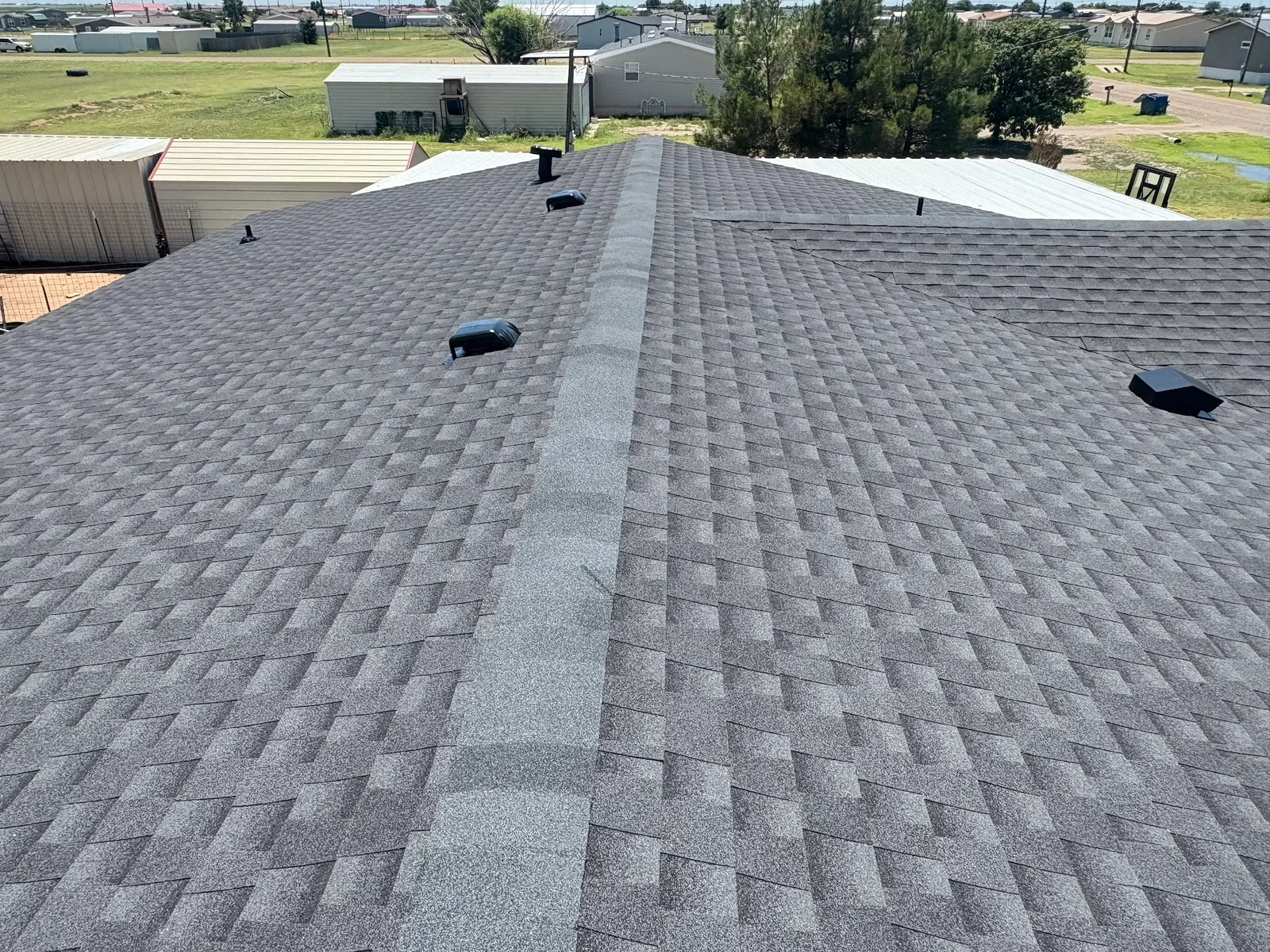
Short answer for the Texas Panhandle: usually yes. The math depends less on one giant hailstorm than on the dozen smaller storms between. This guide explains what Class 4 shingles are, what they cost, and what insurers give back. It also lists the cases where we tell homeowners to skip the upgrade.
What "Class 4" Actually Means
UL 2218 is the impact standard for roofing. The test drops a 2-inch steel ball from 20 feet onto the shingle. The lab drops it twice in the same spot. The shingle mat must not crack. Class 4 is the highest rating in the standard.
Products such as GAF ArmorShield II, Owens Corning Duration FLEX, and CertainTeed NorthGate carry the rating. They use polymer-modified asphalt, often called rubberized asphalt. The modified mat flexes under impact where standard asphalt fractures. The insurance industry's research arm, IBHS, has promoted impact-rated roofing for years because the loss data supports it.
Class 4 does not mean hail-proof. Panhandle storms sometimes throw stones larger than 2 inches, and no shingle survives those. Class 4 wins the common case. Hail from 1 to 1.75 inches totals standard roofs and bounces off modified mats.
The Cost Side
Class 4 adds 10 to 20 percent to a roof replacement. A typical Amarillo replacement runs $9,000 to $18,000, so the upgrade costs about $1,200 to $2,500 on most homes. Full price ranges are in the cost guide.
The premium is smallest at replacement time. You already pay for tear-off, labor, underlayment, and flashing. The upgrade only changes the shingle itself. Adding Class 4 later means paying for a whole new roof again.
The Payback Side
1. Insurance discounts
Many Texas insurers discount the wind and hail portion of the premium for a documented Class 4 roof. Quoted credits commonly fall between 5 and 25 percent, depending on the carrier. On Panhandle premiums, that is real annual money. Ask your agent for the exact credit. We supply the product certification paperwork the carrier requires.
Ask about one trade-off before you sign. Some carriers pair the discount with a cosmetic-damage waiver. That waiver can exclude dents that never cause leaks. Read what changes in the policy, not just the discount number.
2. Avoided deductibles
This is the quiet win. Texas wind and hail deductibles usually run 1 to 2 percent of dwelling coverage. On a $250,000 policy, each claim costs you $2,500 to $5,000 out of pocket. Every storm your roof shrugs off is a deductible you never pay. It is also a claim that never touches your file.
Run that against the upgrade price. One avoided claim repays a $1,200 to $2,500 upgrade in full. Panhandle roofs face several qualifying storms across a shingle lifetime. Hail season arrives late April through June, nearly every year.
3. Longer service life
Small hail ages standard shingles without ever triggering a claim. It crushes granules and bruises mats one storm at a time. Class 4 mats resist that slow erosion. Class 4 roofs deliver 20 to 28 Panhandle years and hold the top of their lifespan range more often. Standard architectural shingles average 18 to 25 years here, and hail often ends them early.
A Worked Example
Take a $14,000 roof replacement on an average Amarillo home. The Class 4 upgrade adds 15 percent, or $2,100. Assume a $2,000 annual premium with a 10 percent wind and hail credit. The discount returns about $200 per year, or $4,000 over 20 years.
Now add one avoided claim. A 1 percent deductible on a $250,000 policy is $2,500. The $2,100 upgrade returns roughly $6,500 over the roof's life under these assumptions. Extra service years come on top of that. Change the assumptions and the direction rarely changes, only the size.
Class 4 on an Insurance-Funded Replacement
Hail totals your roof, the carrier pays for a standard replacement, and you pay the deductible. That moment is the cheapest entry point to Class 4. The carrier's payment covers the base roof. You pay only the upgrade delta of $1,200 to $2,500. Some policies include an endorsement that pays part of the upgrade; ask before the storm, not after.
The order of operations matters. Choose the shingle before the adjuster meeting, so the scope gets written once. Keep the Class 4 certificate with your policy documents. Send a copy to your agent the week the roof finishes, and the discount starts at the next renewal.
Class 4 Compared With Metal
Metal outperforms every shingle in hail and wind. A standing-seam roof lasts 40 to 60 years and costs $18,000 to $35,000 installed. Class 4 shingles cost far less up front and deliver 20 to 28 years. The choice usually follows your planning horizon. Owners staying 20 or more years have the strongest case for metal. Owners thinking in 10-to-20-year terms usually land on Class 4.
Hail Season Timing
Timing changes the value of the upgrade. Panhandle hail season concentrates from late April through June. A Class 4 roof installed in March enters the season at full strength. An old roof that limps into spring risks a claim, a deductible, and storm-season scheduling. If your current roof is near the end, replace it before April. Winter scheduling is also easier, and lead times run shorter.
What to Confirm With Your Insurance Agent
- Ask for the exact credit on a documented UL 2218 Class 4 roof.
- Ask which certificate or form the carrier requires.
- Ask whether the credit adds a cosmetic-damage waiver.
- Ask whether the wind and hail deductible changes.
- Ask how the carrier handles future hail claims on the upgraded roof.
Get the answers in writing before the shingles go on. The certification paperwork takes minutes at install time and is hard to rebuild years later.
When to Skip It
- You plan to sell within two years, and your market will not price the roof in.
- The budget forces a choice between Class 4 and fixing bad ventilation or decking. Fix the fundamentals first.
- You plan to install metal. Metal plays a different and stronger hail game.
- Your carrier offers no credit and enforces a strict cosmetic waiver. The case gets thinner; run the numbers.
The Bottom Line
In hail alley, Class 4 pays you back three ways. You collect an annual premium discount. You avoid deductibles when small hail strikes. You add years of service life. The one-time cost is 10 to 20 percent at replacement.
We recommend Class 4 on most Amarillo replacements. Most Amarillo roofers who work hail claims will tell you the same. Insurance-funded replacements make the strongest case, because you only pay the upgrade delta. Book a free inspection for exact numbers. We quote standard and Class 4 side by side, and the decision stays yours.
Get a Free Roof Inspection
Tell us about your roof and we'll get back to you fast — usually the same day.