
Roof Underlayment: Synthetic vs. Felt
By the CRS Roofing & Construction team — Amarillo, TX
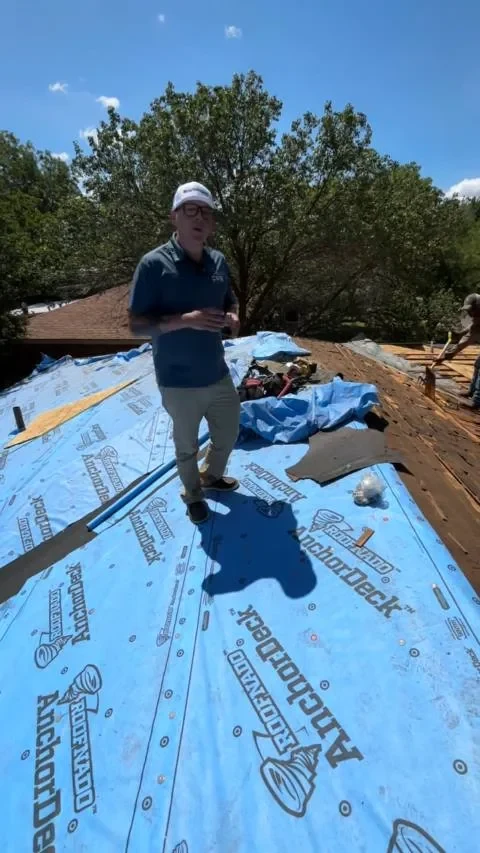
Roof underlayment is a water-resistant layer installed between the roof deck and the shingles. It is the part of the roof you never see and the part that saves you when the shingles cannot. If wind-driven rain works under a shingle, or a storm strips shingles off entirely, the underlayment keeps water off the wood decking until the roof gets fixed. On a Texas Panhandle roof that takes hard wind, hail, and blowing dust, that backup layer is not a line item to cut. This guide explains what underlayment is, how synthetic compares to old-fashioned felt, where the heavy-duty ice-and-water membrane goes, and why it matters more in our climate than most homeowners realize.
What Does Underlayment Actually Do?
Underlayment is the roof's second line of defense against water. The shingles and flashing are the first line, shedding nearly all the rain. But no shingle roof is perfectly watertight in every storm. Wind can drive rain uphill under the shingle edges, and a hailstorm or a gust can tear shingles loose. When that happens, the underlayment is what stands between the weather and your decking, keeping the wood dry and the ceiling below unstained. It also protects the deck during installation, before the shingles are on, and smooths out minor surface irregularities so the shingles lie flat. It is a core part of the roofing system, working with every layer above and below it.
Synthetic vs. Felt: Which Is Better?
For most Panhandle roofs, synthetic underlayment is the better choice. Synthetic is a woven or spun polymer sheet that is lighter, dramatically more tear-resistant, and far more stable in sun and heat than felt. It does not wrinkle or buckle, it grips better underfoot for the crew, and it resists the wind far better while the roof is being installed. Traditional felt is asphalt-saturated paper rated to the ASTM D226 standard. It is cheaper, but it tears in wind, wrinkles when it gets damp, and breaks down quickly if left exposed. On a roof that has to survive Panhandle wind uplift, synthetic earns its small price premium. When we quote a roof replacement, synthetic underlayment is the standard spec, not an upgrade line.
What Is the Difference Between 15-lb and 30-lb Felt?
If felt is used at all, the weight tells you the grade. 15-pound felt is the thin, economy option. 30- pound felt is roughly twice as thick, so it is more durable, lies flatter, and resists tearing in wind. Both are asphalt-saturated felt meeting ASTM D226. The heavier 30-pound is the better of the two whenever felt is specified. That said, a thicker felt is still felt, and it still has felt's weaknesses in sun and moisture. This is why quality roofers across the Panhandle have largely moved to synthetic for the full roof and reserve the premium membrane below for the trouble spots.
What Is Ice-and-Water Membrane and Where Does It Go?
Ice-and-water membrane is the heavy hitter. It is a self-adhering, rubberized asphalt sheet that sticks directly to the deck and seals tightly around every nail driven through it. Because it self-seals at each fastener, it is the single strongest leak barrier on a roof. It does not go everywhere; it goes where the risk is highest. That means the valleys, where two slopes dump a heavy volume of water into one channel, and around every penetration: chimneys, skylights, and vents. It is also run along the eaves. The name comes from cold-climate ice dams, but in Texas its real value is sealing valleys and penetrations against wind-driven rain. It pairs with correctly installed flashing to lock down the exact spots where roofs leak most.
Why Does Underlayment Matter More in Wind and Hail?
The Texas Panhandle is hard on roofs, and that is precisely when the underlayment proves its worth. High wind lifts shingle edges and drives rain in directions a calm-day roof never sees. Hail can crack or displace shingles, breaking the watertight surface. When the first line of defense is compromised mid- storm, the underlayment is the only thing holding water back until a crew can get on the roof. A roof with tough synthetic underlayment and membrane in the valleys buys you time and prevents the interior damage that turns a shingle repair into a drywall-and-insulation job. If a storm just came through, our guide onwhat to do after hail damages your roof walks through the first steps, and Texas hail insurance claims explains how the whole system gets documented.
Is Underlayment Replaced With the Shingles?
Yes. Underlayment is not a permanent layer like the decking. It is torn off and replaced with the shingles during every full roof replacement. That is actually good news: you get a fresh, modern underlayment every time the roof is redone, so an old roof replaced today gets the benefit of current synthetic products and membrane in the valleys even if the original roof had only thin felt. It also means underlayment quality is decided at installation. You cannot upgrade it later without tearing off the roof, so it is worth getting right the first time. A proper roof inspection and a clear, line-item quote should tell you exactly which underlayment is going on your home.
The Bottom Line
Underlayment is the quiet insurance policy under your shingles. Spend a little more for synthetic across the field, add ice-and-water membrane in the valleys and around penetrations, and your roof is far better prepared for Panhandle weather. CRS Roofing & Construction installs this layer to spec on every roof and is happy to show you exactly what goes under your shingles before the work starts. To see how underlayment fits with the rest of the roof, read our parts of a roof guide or the companion guides on roof flashing and roof decking. Ready for a straight answer about your roof? Call (806) 290-0639 or book afree roof inspection.
Roof Underlayment FAQ
What is roof underlayment?
Roof underlayment is a water-resistant layer installed between the roof deck and the shingles. It is the roof's backup barrier: if wind-driven rain gets past a shingle or a shingle blows off, the underlayment keeps water off the wood decking until the roof is repaired. Every code-compliant asphalt shingle roof has it.
Is synthetic underlayment better than felt?
For most Texas roofs, yes. Synthetic underlayment is lighter, far more tear-resistant, and holds up to foot traffic and sun exposure better than felt. Traditional asphalt-saturated felt, rated to ASTM D226, can wrinkle, tear in wind, and absorb water if it gets wet during installation. Synthetic costs a little more and is worth it on a Panhandle roof.
What is the difference between 15-lb and 30-lb felt?
30-pound felt is thicker and heavier than 15-pound felt, so it is more durable, lies flatter, and resists tearing better. Both are asphalt-saturated felt meeting ASTM D226. The 30-pound is the better choice when felt is used at all, but most quality roofers now install synthetic underlayment instead of either felt weight.
What is ice-and-water shield and where is it used?
Ice-and-water shield is a self-adhering, rubberized membrane that sticks directly to the deck and seals around the nails driven through it. It goes in the highest-risk areas: valleys, around chimneys and skylights, and along eaves. Because it self-seals at every fastener, it is the strongest leak barrier on the roof and a smart upgrade in valleys even in the Panhandle.
Can you install underlayment and leave it exposed?
Only temporarily. Underlayment can dry-in a roof and shed water for a limited window, which varies by product, often up to a few months for quality synthetics. It is not a finished roof. Felt degrades quickly in sun and should be covered fast. Always cover underlayment with shingles within the manufacturer's exposure limit.
Does underlayment stop leaks on its own?
No. Underlayment is a secondary barrier, not the primary one. Shingles and flashing shed the water; underlayment catches what gets past them. A roof relies on all layers working together. If underlayment is doing the main job of keeping water out, something above it has already failed and needs repair.
Get a Free Roof Inspection
Tell us about your roof and we'll get back to you fast — usually the same day.