
Architectural vs. 3-Tab Shingles: Which Is Better?
By the CRS Roofing & Construction team — Amarillo, TX
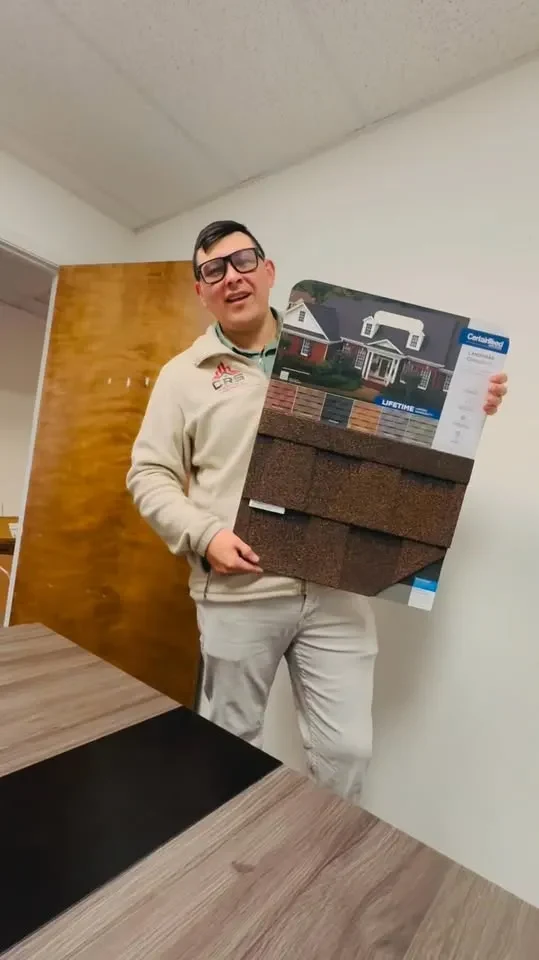
Architectural and 3-tab shingles are the two main styles of asphalt shingle, and for almost every new roof in the Texas Panhandle, architectural wins. Architectural shingles, also called dimensional or laminate shingles, are built from two or more layers of material bonded together, which makes them thicker, heavier, and tougher than the single-layer 3-tab. That extra body gives them higher wind resistance, a longer service life, and a dimensional look most homeowners prefer. 3-tab shingles are the older, flat, economy option. This guide breaks down how the two compare on appearance, thickness, wind resistance, lifespan, and cost, and why nearly every quality shingle roof in Amarillo now uses architectural.
What Is the Difference Between Architectural and 3-Tab Shingles?
The difference is in how they are built. A 3-tab shingle is a single, flat layer with two cutouts along the bottom edge, which create three evenly spaced tabs. Laid across a roof, they form a uniform, repeating line that looks thin and flat. An architectural shingle is laminated: two or more layers of asphalt mat are bonded together, and the tab shapes are varied rather than uniform. That layering gives the shingle real thickness and a shadowed, dimensional surface that mimics wood shake or slate. The practical result is a heavier shingle with more asphalt and more granule coverage per square, which is the foundation for every advantage that follows. Both are asphalt shingles over a fiberglass mat, so they share the same basicroofing system beneath them.
How Do They Compare on Wind Resistance?
Architectural shingles resist wind better, and in the Panhandle that is not a small thing. A heavier, laminated shingle seals down more firmly and presents less of an edge for wind to catch. Lighter 3-tab tabs are easier for high wind to lift and peel, which is how a 3-tab roof starts losing shingles in a storm. Wind performance on asphalt shingles is measured by standardized uplift tests, and architectural products generally carry higher wind ratings than standard 3-tab when they are installed with the correct nailing pattern. The exact rating depends on the product and the installation, so the honest comparison is directional: for a roof that has to stand up to Panhandle wind, the laminated shingle is the stronger starting point.
Which Shingle Lasts Longer?
Architectural shingles last longer than 3-tab in the same conditions. The thicker mat and heavier granule layer shrug off sun, wind, and hail better, so the surface holds its protective granules and stays watertight for more years. That is why manufacturers back architectural lines with longer warranties and why 3-tab roofs tend to show their age sooner. No shingle is immune to the Panhandle, where wind, hail, and relentless UV cut every roof's life short of the label number. Our guide on how long roofs last in the Panhandle covers the real-world numbers, and the honest takeaway is simple: the tougher shingle buys you more years here.
How Much More Do Architectural Shingles Cost?
Architectural shingles cost somewhat more per square than 3-tab, but the gap is modest, and the longer life usually makes them the better value over the roof's lifetime. On a fullroof replacement, the shingle itself is only one line in a project that also covers tear-off, underlayment, flashing, labor, and disposal, so stepping up from 3-tab to architectural changes the total far less than people expect. When you spread the small price difference across years of added service life and better storm performance, the math favors architectural for almost any primary home. We quote both when a homeowner asks, and we are happy to show the numbers side by side.
Why Do Architectural Shingles Dominate New Texas Roofs?
Because they win on nearly every factor that matters in hail alley. They hold up better to wind, they last longer under UV, they look better and help resale, and the price premium is small. There is one more reason specific to this region: architectural shingles are the base for mostClass 4 impact-resistant lines, the shingles engineered to survive hail. A homeowner who wants the strongest hail protection is almost always choosing among laminated products, not 3-tab. If you are weighing that upgrade, our breakdown of whetherimpact-resistant shingles are worth it in Texas walks through the payback math for the Panhandle.
Do 3-Tab Shingles Still Make Sense Anywhere?
Yes, in limited cases. A 3-tab shingle can be the right call on a rental, a shed or detached garage, or when a repair needs to match an existing 3-tab roof. If a budget is genuinely tight and the structure is low priority, the economy option does the job. For a primary home in the Panhandle, though, the smarter spend is an architectural shingle, and often a Class 4 version if hail is the main concern. To see how the two styles fit into the wider menu of asphalt products, read our guide to the types of asphalt shingles, and for a climate-first recommendation, see the best shingles for Texas heat and hail.
The Bottom Line
For a Panhandle home, the choice is clear: architectural shingles beat 3-tab on wind resistance, lifespan, looks, and long-term value, and the extra cost is modest. 3-tab still has a place on low-priority structures and budget matches, but it is no longer the default for a house that has to face Texas storms. CRS Roofing & Construction installs quality architectural and impact-resistant shingles across the Panhandle and will lay out the options in plain terms before any work starts. To talk through the right shingle for your home, call ourAmarillo roofing team at(806) 290-0639 or book afree roof inspection.
Architectural vs. 3-Tab Shingles FAQ
What is the difference between architectural and 3-tab shingles?
Architectural shingles are built from two or more bonded layers, so they are thicker, heavier, and have a dimensional, shadowed look. 3-tab shingles are a single flat layer with cutouts that form three uniform tabs, giving a thinner, repeating pattern. The extra body in architectural shingles is why they resist wind better and last longer.
Are architectural shingles worth the extra cost in Texas?
For almost every Texas Panhandle home, yes. Architectural shingles cost somewhat more per square than 3-tab, but the price gap is modest and they typically last longer and hold up better to wind and hail. On a roof that has to survive Panhandle weather, the longer service life usually makes architectural the better value.
Do architectural shingles hold up better in wind?
Generally yes. Because they are heavier and laminated rather than single-layer, architectural shingles seal down better and carry higher wind ratings than standard 3-tab. On the flat, open shingle field, lighter 3-tab tabs are easier for high wind to lift at the edges, which matters in the Panhandle.
How long do architectural shingles last compared to 3-tab?
Architectural shingles last meaningfully longer than 3-tab in the same conditions. The thicker mat and heavier granule coverage resist sun, wind, and hail better, so they carry longer manufacturer warranties and a longer real-world life. Panhandle wind, hail, and UV shorten every roof, so the tougher shingle is the safer choice.
Can you tell architectural and 3-tab shingles apart from the ground?
Usually, yes. 3-tab shingles look flat and uniform, with a repeating line of evenly spaced tabs. Architectural shingles have a thicker, layered profile that casts shadow lines and varies the tab pattern to mimic wood shake or slate. That dimensional depth is the easiest tell from the driveway.
Are 3-tab shingles still used?
Yes, but mostly in limited roles: rentals, outbuildings, sheds, or matching an existing 3-tab roof on a repair. For a primary home in hail country, most quality roofers now default to architectural, and often to a Class 4 impact-resistant version, rather than standard 3-tab.
Get a Free Roof Inspection
Tell us about your roof and we'll get back to you fast — usually the same day.