
Types of Asphalt Shingles, Explained
By the CRS Roofing & Construction team — Amarillo, TX
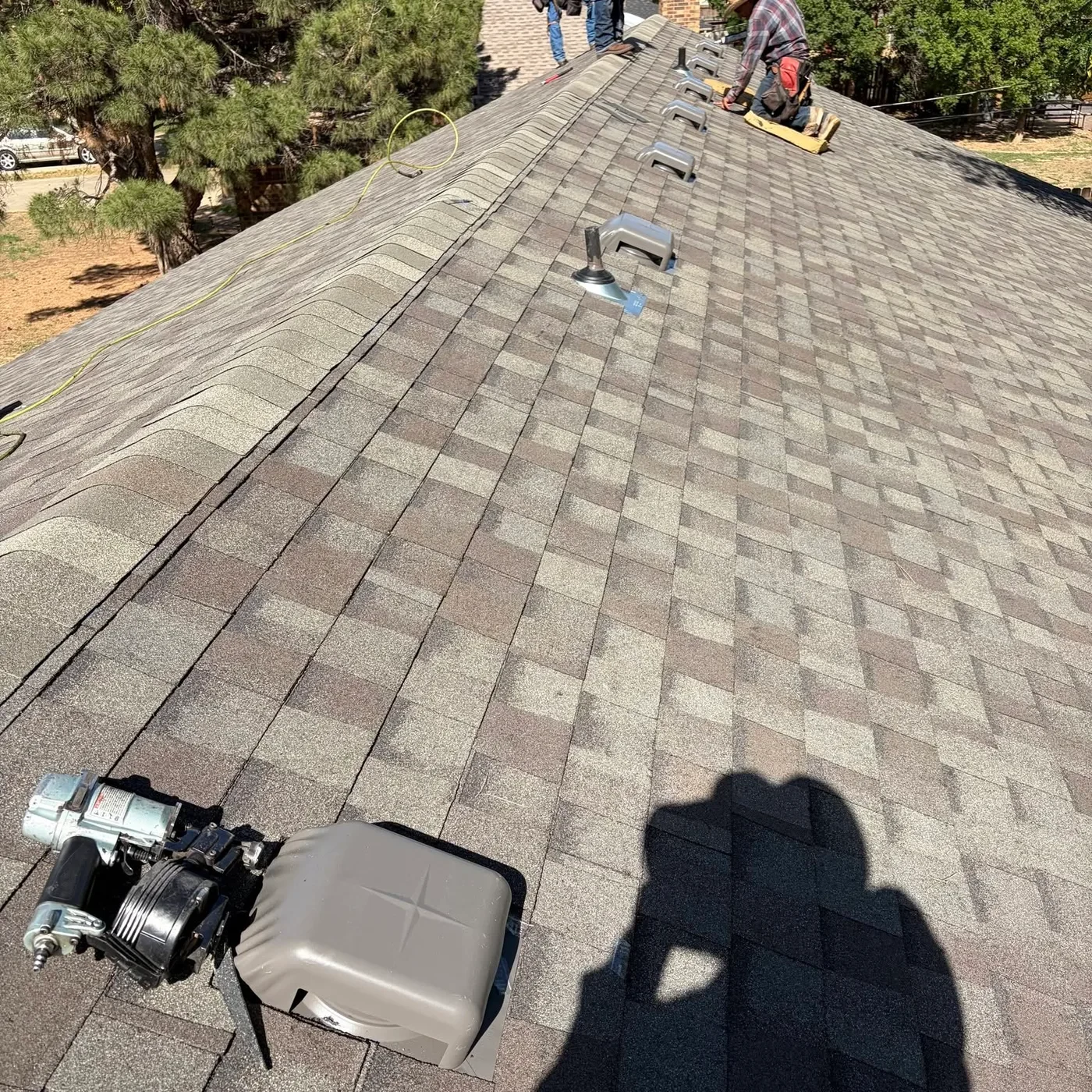
Asphalt shingles come in four main types: 3-tab, architectural (also called dimensional or laminate), luxury or designer, and impact-resistant Class 4. Every one of them is built on the same core recipe, a fiberglass mat coated in waterproofing asphalt and surfaced with ceramic granules, but they differ in how many layers are bonded together, how much material is packed in, how they handle wind and hail, how they look, and what they cost. Understanding those differences is how a homeowner picks the right roof instead of just the cheapest one. This guide explains each type, what sets it apart, and which ones make the most sense on a Texas Panhandle shingle roof.
What Are the Main Types of Asphalt Shingles?
There are four, and they form a clear ladder from basic to premium. 3-tab is the flat, single-layer economy shingle. Architectural, the most common choice today, is laminated from two or more layers for thickness and durability. Luxury or designer shingles sit at the top of the asphalt range, built even heavier to imitate slate or cedar shake. Running alongside those is the impact-resistant Class 4 category, which is less a separate look than a performance grade: a shingle, usually architectural or luxury in style, reinforced to survive hail. The rest of this guide takes each in turn. All of them are one layer in a complete roofing system that also includes underlayment, flashing, and ventilation.
What Are 3-Tab Shingles?
3-tab shingles are the original asphalt shingle and the thinnest, lightest option. Each shingle is a single flat layer with two cutouts along the bottom that create three uniform tabs, so a finished roof has a flat, repeating, grid-like pattern. They are the least expensive asphalt shingle and the easiest to recognize. The trade-off is durability: being single-layer and light, they carry lower wind ratings and shorter service life than the laminated types. In the Panhandle they make the most sense on rentals, sheds, and detached garages, or when a repair has to match an existing 3-tab roof. For a primary home, most roofers now step up at least to architectural.
What Are Architectural (Dimensional) Shingles?
Architectural shingles, also called dimensional or laminate shingles, are the workhorse of modern residential roofing. They are built by bonding two or more layers of asphalt mat together and varying the tab shapes, which gives the roof real thickness and a shadowed, three-dimensional look that mimics wood shake. That extra body is not just cosmetic: it means more asphalt and more granule coverage, which translates to higher wind ratings, better resistance to UV and hail, and a longer life than 3-tab. They cost somewhat more, but the premium is modest and the durability gain is large, which is why architectural is the default on new Texas homes. For a direct comparison, see our guide onarchitectural vs. 3-tab shingles.
What Are Luxury or Designer Shingles?
Luxury shingles, sometimes labeled designer or premium, are the top tier of the asphalt family. They are thicker and more heavily laminated than standard architectural shingles and are shaped and colored to closely imitate natural slate or hand-split cedar shake, often with a layered, random profile that looks convincingly like the real material at a fraction of its weight and cost. They are the heaviest and most expensive asphalt option, and homeowners choose them mainly for the high-end appearance. Many luxury lines also carry strong wind and impact performance, so the look and the toughness can come together, which makes them a real option on upscale Panhandle homes rather than a purely cosmetic splurge.
What Are Impact-Resistant (Class 4) Shingles?
Impact-resistant shingles are defined by a performance grade rather than a look. The grade comes from the UL 2218 test, which drops steel balls of increasing size onto a shingle to simulate hail strikes. A shingle earns the top mark, Class 4, only if it withstands the largest ball, a two-inch steel ball dropped from twenty feet, without cracking the mat on the back. To pass, these shingles use reinforced or modified-asphalt construction that absorbs the blow instead of fracturing. In hail country that matters, and it can also qualify a home for an insurance premium discount. Because this is the single most relevant upgrade for the Panhandle, we cover it in depth on our impact-resistant shinglespage and in the guide on whetherClass 4 shingles are worth it in Texas.
What Attributes Actually Separate the Types?
Four attributes do most of the work. The first is construction: single-layer versus laminated, and how many layers, which drives weight and toughness. The second is wind rating, verified by standardized uplift tests, where the heavier laminated shingles outperform 3-tab. The third is impact rating, the UL 2218 class, which tells you how a shingle handles hail and tops out at Class 4. The fourth is appearance, from the flat grid of 3-tab to the shake-like depth of architectural and the slate look of luxury lines. Price tracks all of these, rising as the shingle gets thicker, tougher, and more detailed. Weighing those four against your hail exposure and budget is how you land on the right type. If you are also comparing against a metal roof, our metal vs. shingles guide runs that matchup for the Panhandle.
The Bottom Line
Asphalt shingles are not one product but a ladder: 3-tab for low-priority or budget jobs, architectural as the sensible default, luxury for a premium slate or shake look, and Class 4 impact-resistant as the upgrade that earns its keep in hail alley. The right choice comes down to how much hail exposure your home has, what look you want, and your budget. CRS Roofing & Construction installs every one of these types across the Panhandle and will walk you through the trade-offs in plain language, with no pressure to over-buy. To plan your roof replacement or just get a straight answer, call(806) 290-0639 or schedule afree roof inspection.
Types of Asphalt Shingles FAQ
What are the main types of asphalt shingles?
There are four main types of asphalt shingle: 3-tab, architectural (also called dimensional or laminate), luxury or designer, and impact-resistant Class 4. They share the same basic build of a fiberglass mat coated in asphalt and surfaced with granules, but they differ in thickness, number of layers, wind and impact performance, appearance, and price.
What is the difference between 3-tab and architectural shingles?
3-tab shingles are a single flat layer with cutouts that form three uniform tabs, giving a thin, repeating look. Architectural shingles are laminated from two or more layers, so they are thicker and heavier, carry higher wind ratings, last longer, and have a dimensional, shadowed appearance. Architectural is the default on most new Texas homes.
What are luxury or designer shingles?
Luxury or designer shingles are the premium tier of asphalt shingle. They are even thicker and more heavily laminated than standard architectural shingles and are shaped to closely imitate natural slate or cedar shake. They are the heaviest and most expensive asphalt option and are chosen mostly for high-end appearance, often with strong wind and impact performance as well.
What makes a shingle Class 4 impact-resistant?
A Class 4 rating is the top impact grade under the UL 2218 test, in which steel balls are dropped onto the shingle to simulate hail. A shingle earns Class 4 only if it survives the largest ball, a two-inch steel ball dropped from twenty feet, without cracking the mat on the back. These shingles use reinforced or modified-asphalt construction to absorb hail impact, which is why they are the go-to for the Panhandle.
Which type of asphalt shingle is best for Texas?
For most Texas Panhandle homes, an architectural shingle is the baseline and a Class 4 impact-resistant shingle is the upgrade worth considering, because hail is the region's biggest roof threat. 3-tab suits rentals and outbuildings, and luxury shingles suit homeowners who want a premium slate or shake look. The right pick depends on hail exposure, budget, and the look you want.
Are all asphalt shingles made the same way?
They share one core recipe: a fiberglass mat coated in waterproofing asphalt and surfaced with ceramic-coated granules that block UV and add color. What changes across the types is how many layers are laminated together, how much asphalt and granule weight is packed in, and whether the asphalt is modified for impact resistance. Those choices drive the differences in durability, wind rating, and price.
Get a Free Roof Inspection
Tell us about your roof and we'll get back to you fast — usually the same day.