
Roof Repair vs. Replacement: How to Decide
By the CRS Roofing & Construction team — Amarillo, TX
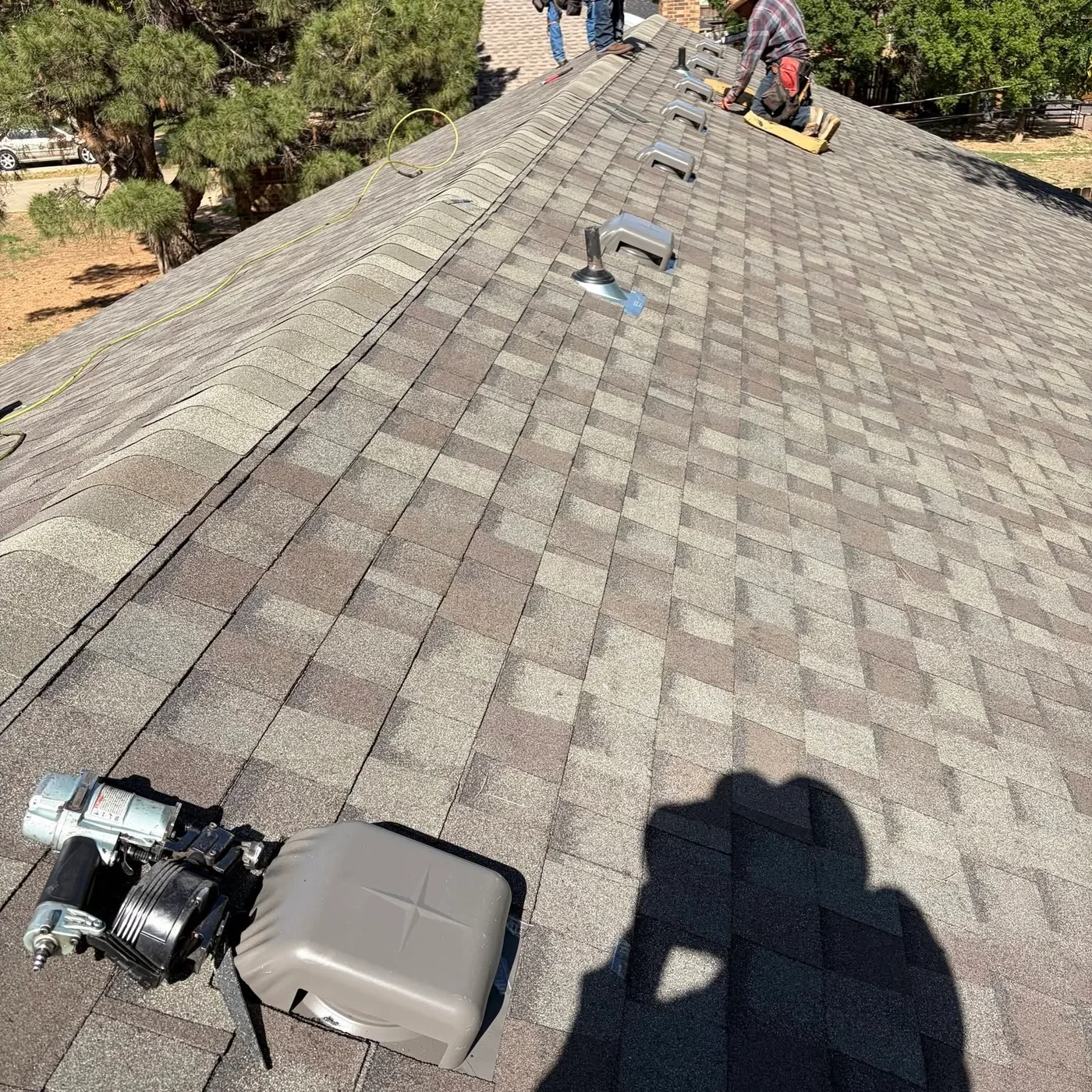
Roofers earn more on a roof replacement than on a repair. That bias colors much of the advice homeowners hear after a storm. This guide gives you the framework we use on Panhandle roofs. It is written down so you can hold any contractor to it, including us.
The Three Thresholds
Three tests settle most repair-or-replace decisions. Run all three before you spend money. When two of the three point to replacement, replace.
1. The 25% rule
Compare the repair quote to the full replacement price. When a repair costs more than 25 percent of replacement, replace the roof. A $3,000 repair on a roof that replaces for $12,000 fails the test. You pay for a quarter of a roof and receive none of one. The rest of the roof keeps aging on the same schedule.
Use local numbers to set the line. Most Amarillo replacements run $9,000 to $18,000. The 25 percent threshold therefore falls between $2,250 and $4,500. Most honest repairs cost $300 to $1,200 and pass with room to spare.
2. The three-quarters-of-life rule
Every roof has an expected lifespan, and the Panhandle shortens it. A 3-tab shingle roof lasts 12 to 15 years here. An architectural shingle roof lasts 18 to 25 years. The full table is in how long roofs really last here.
Past 75 percent of that lifespan, change your goal. Repair only to keep water out. Do not buy upgrades for a roof in its final years. Put the roof replacement on your calendar for the next 12 to 24 months. A planned replacement in October costs the same as a forced replacement in May, with far less stress.
3. The spread test
Localized damage repairs well. One slope with wind damage, one failed pipe boot, or one bad valley points to repair. The damage has a clear boundary, and the crew can work to it.
Spread damage does not repair well. Granule loss across several slopes means the surface layer is failing everywhere at once. Shingles that crack underfoot mean every repair breaks the shingles beside it. Hail bruising on every exposure means the field itself is finished. Patching a failing field makes you pay twice, once now and again at replacement.
The Quick Decision Table
| What you see | Roof age | The usual call |
|---|---|---|
| Missing or lifted shingles after a wind front | Under 12 years | Repair, $300 to $1,200 |
| Cracked pipe boot or nail pops | Any age | Repair, often under $600 |
| One leak with dry decking around it | Under 15 years | Repair |
| Granules in gutters plus bald patches | Over 12 years | Replace |
| Hail bruising on two or more slopes | Any age | Inspect, then file a claim |
| Leaks that return after each fix | Over 15 years | Replace |
Clear Repair Cases
- Wind removes or lifts shingles after a front, and the rest of the roof is healthy. This is standard roof repair work at $300 to $1,200.
- A cracked pipe boot, nail pops, or one failed flashing detail. These three cover most Panhandle service calls.
- One leak with a traceable source and dry decking around it.
- Any roof under 12 years old with localized damage and no widespread hail bruising.
Clear Replacement Cases
- Documented hail bruising across two or more slopes. That is an insurance conversation before it is a repair conversation. Start with the claims guide.
- Granules fill the gutters and bald patches show. The surface no longer protects the shingle mat.
- Shingles crack when a technician works on them. Every repair now creates new damage.
- Leaks that move after each fix. The roof system has failed, not one detail.
- Any 3-tab roof past 12 to 15 Panhandle years. Repairs at that age buy months, not years.
What Each Path Costs and How Long It Takes
A repair visit takes two to four hours on most homes. Common repairs run $300 to $1,200. You receive photos of the finished work and a warranty on the repaired area. The crew leaves the same day.
A roof replacement on a typical Amarillo home takes one to two days. Expect $9,000 to $18,000 for architectural shingles, depending on size and pitch. Class 4 impact-resistant shingles add 10 to 20 percent to that price. The replacement cost guide breaks the numbers down line by line.
What Happens During a Replacement
A replacement follows a fixed sequence. Day one starts with tear-off down to the decking. The crew replaces any rotten decking at a set price per sheet. Underlayment, ice-and-water barrier at the valleys, and drip edge go down next. Shingles follow, fastened with six nails each for Panhandle wind.
Day two covers ridge caps, vents, flashing, and cleanup. The crew sweeps the yard with magnets to collect nails. Most homes finish in one to two days. Rain or high wind can add a day.
Two Half-Measures to Avoid
Skip the shingle layover. Some contractors offer to install new shingles over the old layer. The layover saves $1,000 to $2,000 in tear-off costs. It also hides the decking, voids many warranties, traps heat, and adds weight. In Panhandle wind and hail, layovers age out years early. Insurance adjusters also treat them with suspicion on the next claim.
Skip the one-slope replacement too, in most cases. Replacing one slope on an aging roof creates a roof with two ages. The old slopes keep failing on schedule. Color match also drifts, because shingles fade in Panhandle sun. Replace one slope only when the rest of the roof has eight or more expected years left.
The Panhandle Tiebreakers
Two local factors decide close calls. The first is hail season. Panhandle hail concentrates from late April through June. An old but dry roof in February deserves a hard look before April. A new Class 4 roof entering hail season beats an old roof entering it.
The second factor is insurance timing. When a storm damages the whole roof, a small repair can bury a valid claim. Most policies give you one to two years to file. Document the full damage before you choose the size of the fix. A dated inspection report protects the claim while you decide.
How Panhandle Weather Ages a Roof
Wind works on local roofs all year. Gusts near 60 mph lift shingle tabs and break sealant bonds. Check roof edges and ridge lines after every strong front.
Freeze-thaw winters widen small failures. Water enters a cracked pipe boot, freezes overnight, and expands. One ignored boot can become a decking repair by March. Fix small failures within weeks, not seasons.
Sun ages south- and west-facing slopes fastest. Those slopes reach the replacement thresholds one to three years before the north side. Judge the roof by its worst slope, not its best.
How to Get an Honest Answer
Require three things from any roofer, in writing. First, photos of the specific damage on your roof. Second, a repair price and a replacement price side by side. Third, an estimate of the roof's remaining life.
Our free inspection produces all three by default. Many of those inspections end with a $450 repair and a note to check back in five years. When the evidence points to replacement, you see the photos before you see a price. Costs for either path are in the repair guide and the replacement cost guide.
Get a Free Roof Inspection
Tell us about your roof and we'll get back to you fast — usually the same day.