
Drip Edge: What It Is and Why Code Requires It
By the CRS Roofing & Construction team — Amarillo, TX
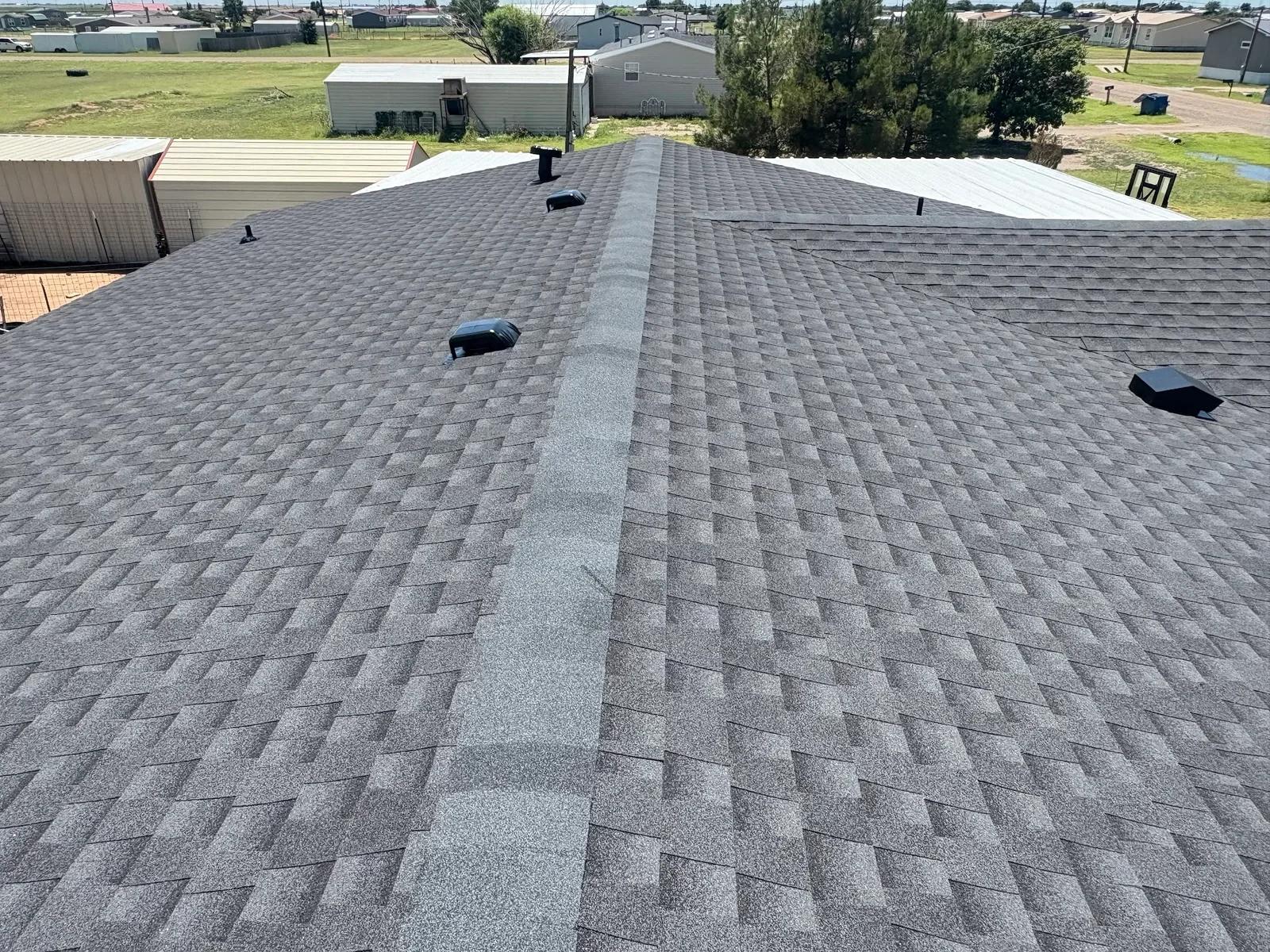
Drip edge is an L-shaped strip of metal flashing installed along the edges of a roof, at the eaves and the rakes, that directs water off the roof and into the gutter instead of back against the house. It is one of the smallest parts of a roof and one of the most important, because it protects the exact spot where the roof surface meets the wood trim. Skip it, and water wicks back under the shingle edge and rots the fascia and the edge of the decking. Texas building code requires it for good reason. This guide explains what drip edge does, why code mandates it, where it goes, and how to tell if your roof has it.
What Is Drip Edge and What Does It Do?
Drip edge is a bent metal strip, shaped like an L or a T in profile, that runs along the perimeter of the roof. Its job is simple and vital: it carries water running off the roof past the edge of the decking and the fascia so the water drips cleanly into the gutter or onto the ground rather than curling back under the roof edge. Surface tension causes water to cling and run backward along a bare edge, and that backward flow is what soaks and rots the wood. The metal lip of a drip edge breaks that tension and forces the water to fall. It is a core piece of the roofing system that most people never notice until it is missing.
Does Code Require Drip Edge in Texas?
Yes. The International Residential Code, the model code that Texas cities and counties adopt, has required drip edge at the eaves and rakes of asphalt shingle roofs since the 2012 edition, in section R905.2.8.5. That means a roof installed or replaced to current code should have drip edge on every edge. It also means a missing or improperly installed drip edge is a legitimate line item when a roof is being brought up to code during an insurance roof replacement. If an older roof never had it, the new one is required to.
What Happens to a Roof Without Drip Edge?
A roof with no drip edge slowly destroys its own edges. Water sheeting off the roof curls back against the fascia board and the raw edge of the decking, soaking wood that was never meant to stay wet. Over a few seasons that leads to peeling paint, dark staining, and soft, spongy, rotted fascia and deck edges that then need carpentry to repair. Missing drip edge also lets water run behind the gutters instead of into them, and it leaves the shingle edges less supported against Panhandle wind uplift. A cheap strip of metal prevents a repair bill many times its cost. If your fascia is already showing damage, aroof repair may need to address both the edge metal and the rotted wood.
Where Does Drip Edge Go: Eaves vs. Rakes?
Drip edge goes on both the eaves and the rakes, but the installation order differs, and that detail separates a correct job from a sloppy one. At the eaves, the horizontal lower edges where gutters hang, the drip edge is installed first, directly on the deck and under the underlayment, so any water that reaches the underlayment still sheds out onto the metal and into the gutter. At the rakes, the sloped side edges of the roof, the drip edge goes over the underlayment. This over-and-under sequence makes sure water is always directed outward at every edge. It is the kind of detail a careful roofer gets right automatically.
What Is Drip Edge Made Of?
Drip edge is formed from thin, rust-resistant metal, most commonly galvanized or galvalume steel or aluminum, and comes in long sections that overlap along each run of the edge. Aluminum has the advantage of never rusting and is available in colors to match the shingles or the trim, which keeps the roofline looking clean. In the Texas Panhandle, where edges take blowing dust, intense sun, and hard wind, a corrosion-resistant metal in a color that blends with the roof is the practical standard. The gauge should be stout enough to stay flat and not oil-can along the edge.
How Can You Tell If Your Roof Is Missing Drip Edge?
You can often check from the ground. On a roof with drip edge, a thin, straight metal lip runs along the eaves and rakes, tucked just under the edge of the shingles. On a roof without it, the shingles overhang bare wood, and the fascia below often shows the telltale signs of long-term water contact: streaking, bubbled or peeling paint, and soft or crumbling board edges. Because the eave detail tucks under the underlayment, the surest confirmation comes from a roof inspection, where a roofer can check the edge metal, the fascia condition, and how water is actually being shed.
The Bottom Line
Drip edge is proof that the small details decide how long a roof lasts. It costs very little, it is required by code, and it protects the fascia and deck edges that are expensive to rebuild once they rot. When you review a roofing quote, drip edge at both the eaves and the rakes should be a listed item, not an afterthought. CRS Roofing & Construction installs code-compliant drip edge on every roof and will show you the edge detail before and after. To see how it fits the whole roof, read ourparts of a roof guide, or the companion guides onroof flashing and roof decking. For a straight look at your roof's edges, call (806) 290-0639 or book afree roof inspection.
Roof Drip Edge FAQ
What is drip edge on a roof?
Drip edge is an L-shaped strip of metal flashing installed along the edges of the roof, at the eaves and the rakes. It directs rainwater off the roof edge and into the gutter, away from the fascia board and the edge of the decking, so water cannot wick back underneath and rot the wood.
Is drip edge required by code in Texas?
Yes. The International Residential Code, which Texas jurisdictions follow, has required drip edge at eaves and rakes on asphalt shingle roofs since the 2012 edition (section R905.2.8.5). A roof replaced to current code should have drip edge installed, and a missing drip edge is a legitimate item to document on an insurance scope.
What happens if a roof has no drip edge?
Without drip edge, water running off the roof curls back against the fascia and the exposed edge of the decking instead of dropping into the gutter. Over time that rots the fascia boards and the deck edge, feeds water behind the gutters, and leaves the shingle edges more exposed to wind uplift. It is a small part that prevents expensive edge rot.
Where does drip edge go, at the eaves or the rakes?
Both. At the eaves, the lower edges where gutters hang, drip edge is installed under the underlayment so water sheds onto it and into the gutter. At the rakes, the sloped side edges, it is installed over the underlayment. Getting that order right is part of a correct installation and a common detail a quality roofer gets right.
What is drip edge made of?
Drip edge is usually formed from galvanized or galvalume steel or aluminum, in long sections that overlap along each edge. Aluminum will not rust and comes in colors to match the roof or trim. In the Texas Panhandle, a corrosion-resistant metal that holds up to sun and wind is the sensible choice.
How can I tell if my roof is missing drip edge?
Look at the roof edges from the ground. With drip edge, you see a clean metal lip running along the eaves and rakes just under the shingle edge. Without it, the shingles overhang bare wood fascia, and you may see staining, peeling paint, or soft, rotted fascia boards where water has been wicking back. A roof inspection confirms it.
Get a Free Roof Inspection
Tell us about your roof and we'll get back to you fast — usually the same day.