
Roofing Cost Per Square, Explained
By the CRS Roofing & Construction team — Amarillo, TX
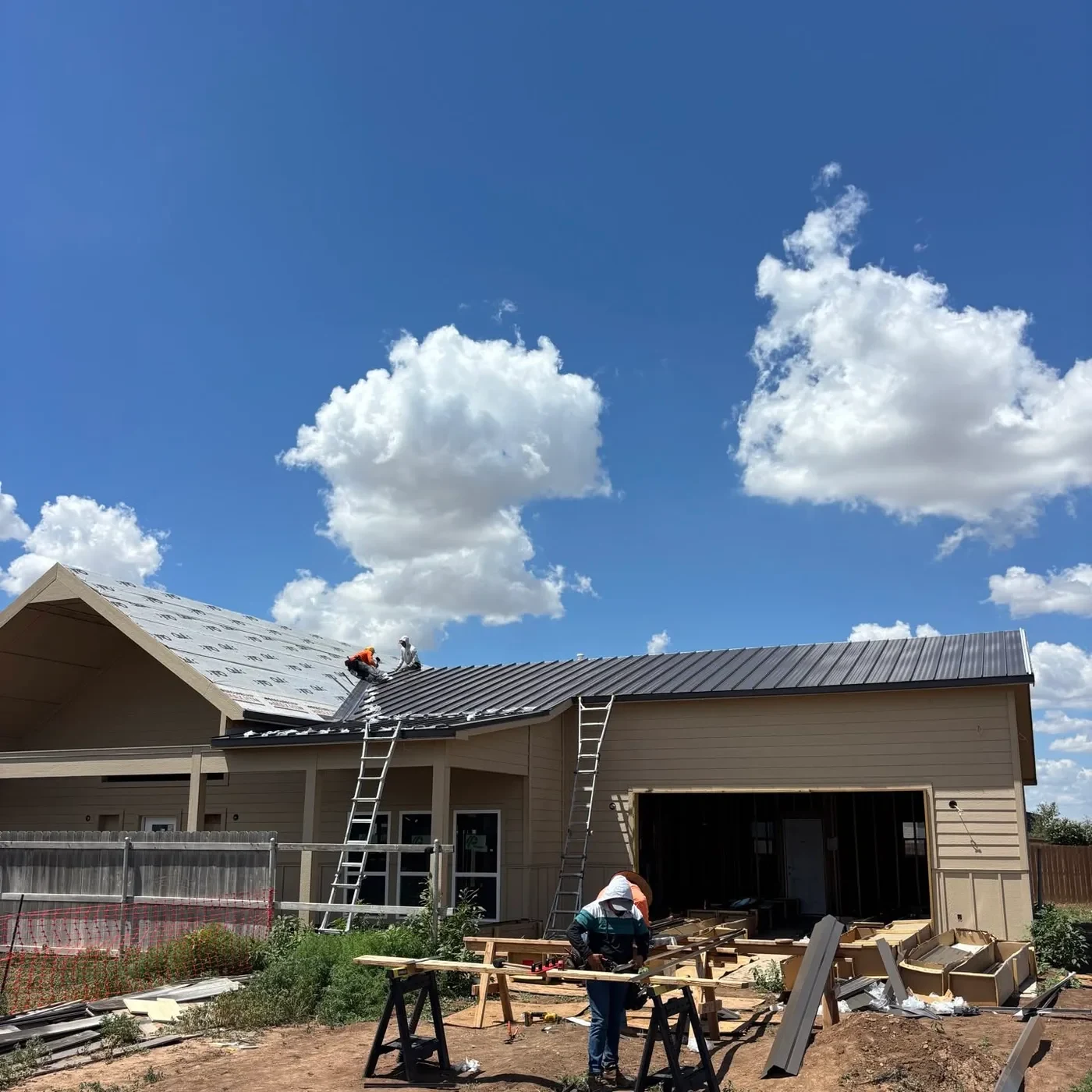
A roofing square is 100 square feet of roof surface, and it is the unit every roofer uses to measure a roof and price the job. When a contractor says a roof is 25 squares, that means 2,500 square feet of surface to cover. Pricing per square is how the trade keeps estimates consistent across homes of different sizes. This guide explains what a square is, how pros price by it, how to read a per-square quote without getting fooled, and why the total job always costs more than material times squares. The specific dollar ranges here are general Texas estimates. Your real number comes from afree roof inspection.
What Is a Roofing Square?
A square is simply 100 square feet of roof area, a 10-foot by 10-foot patch. It is a standard industry convention, not a legal or government measure, but every reputable roofer uses it, and so do shingle manufacturers who package and sell product by the square. The math is direct. A roof with 2,400 square feet of surface is 24 squares. A roof with 3,100 square feet is 31 squares. Measuring in squares lets a roofer quote materials, labor, and waste on the same footing for a small ranch and a large two-story.
How Do Roofers Price Per Square?
A roofer builds a per-square price from the cost of the roofing material, the underlayment and fasteners, and the labor to install them. That per-square figure then multiplies across the roof. Material changes the number a lot. Installed, a square of architectural asphalt commonly runs about $400 to $650 in Texas, three-tab is cheaper, and metal runs well into four figures per square. The full material comparison is in our guide onroof replacement cost by material. Pitch and complexity matter too, because a steep or cut-up roof costs more per square to install than a simple low-slope gable. Pricing per square is why a roofer can give a fast ballpark the moment they know your roof area and material.
Why Is a Roof Bigger Than the House Footprint?
The square count almost always runs higher than the home square footage, and that surprises people. Two things cause it. First, a roof is sloped, so the surface stretches over the footprint rather than lying flat across it. The steeper the pitch, the more surface there is. Roofers apply a pitch multiplier to the footprint to account for this. Second, the roof overhangs the walls at the eaves and rakes, adding area beyond the floor plan. On top of that, roofers add a waste factor, usually around 10 to 15 percent, for the shingles cut and discarded at hips, valleys, and edges. A 2,000-square-foot home often carries a roof of 23 to 26 squares once all of that is counted.
What Is Included in the Total Job Cost?
This is where homeowners get tripped up. Material per square times the number of squares is only part of the bill. A complete roof replacement includes several costs that are not in the raw per-square shingle price.
- Tear-off. Removing the old roof is labor, and a second existing layer adds more of it.
- Decking. Any rotted or non-nailable wood is replaced, usually priced per sheet because it cannot be seen until tear-off. See roof decking for how that works.
- Underlayment. The water-resistant layer under the shingles, where synthetic beats felt in Panhandle weather. Our underlayment guide covers the difference.
- Flashing and accessories. New flashing, pipe boots, drip edge, and ventilation are part of a proper roof, not extras.
- Labor and disposal. The crew, the dumpster, and hauling away the old material.
- Permits and fixed costs. Some costs do not scale with size, so very small roofs can look expensive per square.
That is why a 25-square roof does not cost exactly 25 times the price of one square of shingles. The square is the measuring stick. The job is the whole system.
How Do You Read a Per-Square Quote?
When a roofer gives you a per-square number, ask one question first: what does it include? A clean quote states the material, the underlayment, whether tear-off and disposal are in the price, how decking is handled if damage turns up, and what flashing and accessories are covered. A low per-square figure is often low because it leaves scope out, and the missing scope is usually the part that keeps water out. Compare bids by the full written scope, line by line, rather than by the headline per-square rate alone. A fair contractor is happy to show you exactly what each square buys. We price it that way on every roof replacement, and the real-world totals for the metro are in the Amarillo roof replacement cost guide.
The Bottom Line
A roofing square is 100 square feet, and pricing per square is how roofers keep estimates honest across different homes. Just remember that the per-square material rate is a building block, not the final bill. The total includes tear-off, decking, underlayment, flashing, labor, and disposal, and the roof itself is larger than your floor plan because of pitch, overhangs, and waste. CRS Roofing & Construction measures the roof, prices every square honestly, and shows you what goes into the number. To put rough figures to your own roof, try theroof cost calculator, read the companion guide onroof repair cost in Texas, or call(806) 290-0639 to book a free roof inspection.
Roofing Cost Per Square FAQ
What is a roofing square?
A roofing square is 100 square feet of roof surface, measured as a 10-foot by 10-foot area. It is the standard unit roofers use to measure a roof and price materials and labor. A 2,500-square-foot roof surface is 25 squares. The square is an industry convention, not a government or legal standard, but every reputable roofer uses it.
How much does one roofing square cost in Texas?
Installed, one roofing square of architectural asphalt shingles commonly runs about $400 to $650 in Texas, including underlayment and labor. Three-tab is cheaper and metal is much more. A per-square price is a building block, not a final bill, because the total job also includes tear-off, disposal, any decking repair, and fixed costs that do not scale with size.
How many squares is a typical roof?
A typical Texas home has roughly 20 to 30 roofing squares once the roof surface is measured. That is larger than the home footprint, because the roof area counts pitch and overhangs. A 2,000-square-foot house often carries a roof of 23 to 26 squares. The steeper and more cut-up the roof, the more squares it has for the same floor plan.
Why is my roof bigger than my house square footage?
Roof area is almost always larger than floor area because the roof is sloped, not flat, and it hangs past the walls at the eaves. A steeper pitch stretches the surface over the same footprint. Roofers apply a pitch multiplier and a waste factor to the footprint to estimate the true roof area, which is why the square count runs higher than the home size.
What is included in a per-square roofing price?
A per-square price usually covers the shingles or panels, underlayment, fasteners, and the labor to install them. The full job cost adds tear-off of the old roof, disposal, new flashing and pipe boots, any decking replacement priced per sheet, and permits. Always confirm what a per-square number includes, because two quotes using the same figure can cover very different scopes.
Should I compare roofers by their per-square price?
Per-square price is a useful comparison only when both quotes include the same scope. A low per-square number often leaves out decking, upgraded underlayment, or proper flashing, so it looks cheaper while covering less. Compare the full written scope line by line, and treat a per-square figure as one input rather than the whole decision.
Get a Free Roof Inspection
Tell us about your roof and we'll get back to you fast — usually the same day.