
TPO vs. PVC Roofing: Which Membrane Is Right?
By the CRS Roofing & Construction team — Amarillo, TX
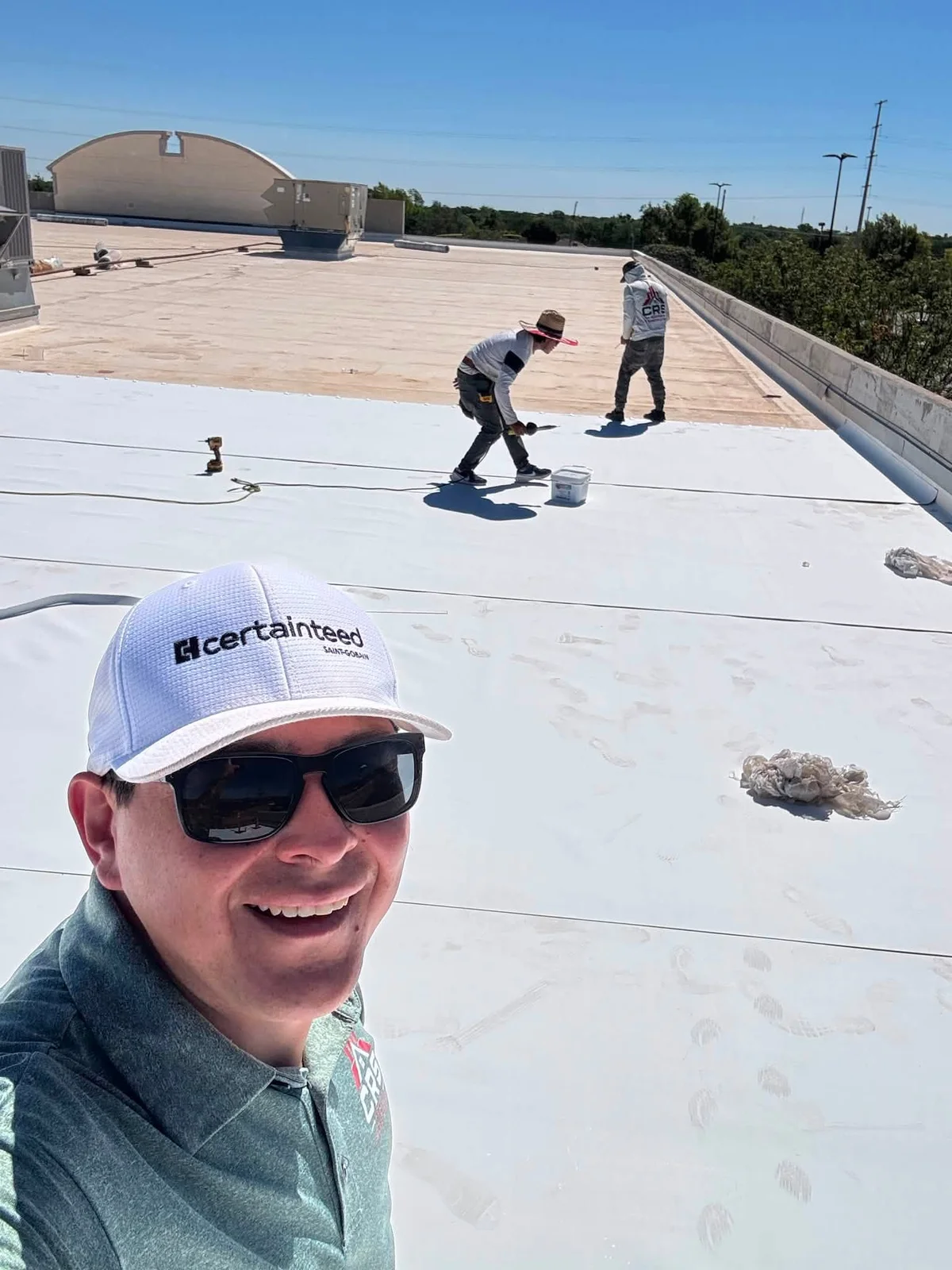
TPO and PVC are the two leading single-ply membranes for flat and low-slope commercial roofs, and they have more in common than most building owners realize. Both are thermoplastics, both are installed as large reflective sheets with heat-welded seams, and both deliver excellent waterproofing when installed well. The real decision between them comes down to chemistry and cost: PVC resists grease and chemicals that would attack a TPO roof, while TPO usually costs less on a building that will never see that exposure. This guide explains what the two membranes share, where they differ, and how to tell which one fits your building.
What Do TPO and PVC Have in Common?
Start with what they share, because it is most of the roof. TPO and PVC are both single-ply thermoplastic membranes. That means each roof is a relatively thin, flexible sheet, and the seams between sheets are heat-welded with hot air into one continuous surface rather than glued with adhesive. A well-made thermoplastic weld is often as strong as the membrane itself, which is why both systems resist leaks so reliably. Both are usually installed in white, reflective sheets that bounce sunlight, and both handle the temperature swings a commercial roof lives through. In day-to-day performance on a sound building, the two look and behave a great deal alike. For a wider view of the field, our comparison ofTPO, EPDM, and metal sets these membranes against the other major commercial systems.
How Are TPO and PVC Different?
The differences are chemistry and cost, and they are the whole decision. PVC membrane is formulated to resist chemicals, grease, and oils. It holds up where a roof is exposed to substances that would degrade a standard membrane. TPO is a different thermoplastic that performs beautifully on standard commercial buildings but is not built to shrug off grease and oils the way PVC is. On price, TPO is typically the less expensive membrane, which is a large part of why it is installed on so many commercial roofs. PVC generally carries a higher cost because of its chemical-resistant formulation. Neither is simply better. Each wins on the right building.
When Is PVC the Right Choice?
PVC earns its premium on roofs that face chemical or grease exposure, and the classic example is a restaurant. Kitchen exhaust fans put a steady film of grease and cooking oils onto the roof around the vent, and that film will slowly break down a membrane that is not designed to resist it. PVC is designed exactly for that fight, which is why it is the standard recommendation for restaurants, commercial kitchens, and certain industrial buildings whose rooftop exhaust carries oils or chemicals. On those buildings the higher upfront cost of PVC buys years of service that a cheaper membrane would not deliver in the same conditions. If your building vents grease or chemicals onto the roof, PVC is usually the safer long-term investment, and our commercial roofing crew can confirm the exposure before you commit.
When Is TPO the Right Choice?
TPO is the right choice for the large majority of commercial buildings that do not put grease or chemicals onto the roof. Warehouses, retail, offices, churches, and similar buildings get the same heat-welded seams, the same reflective white surface, and the same strong waterproofing from TPO, at a lower cost than PVC. On those roofs, paying the PVC premium buys chemical resistance the building will never use, so TPO is simply the better value. This is why TPO roofing has become one of the most widely installed commercial membranes in the country. The decision is not about which membrane is higher quality in the abstract. It is about matching the membrane to what the roof will actually face.
How Do They Perform in the Texas Panhandle?
Both membranes are well suited to Panhandle conditions in most respects. White TPO and white PVC both reflect the intense summer sun that beats down on Amarillo-area roofs, which helps hold down cooling costs through the long hot season. Both stay flexible through the wide temperature swings between Panhandle summer and winter. Hail is the one factor that respects no membrane: a severe Panhandle hailstorm can damage any roof, which is why hail is handled as an insurance claim rather than a warranty issue. On both systems, a professional installation and an appropriate membrane thickness improve how the roof stands up to weather, which again points back to who installs it, not just what is installed.
How Should You Choose Between Them?
The decision starts with a single question: what will the roof be exposed to? If the building puts grease, oils, or chemicals onto the roof, PVC is the safer long-term choice and worth its premium. If the roof will not see that exposure, TPO usually delivers the same waterproofing and the same reflectivity for less money. From there, the building, the rooftop equipment, the budget, and the warranty options all factor in, which is why a roofer should look at the actual building before recommending one. Choosing a membrane is also only part of the larger repair-or-replace picture, which our guide torepair, recoat, or replace walks through in full.
The Bottom Line
TPO and PVC are close cousins: both single-ply thermoplastics, both heat-welded into one continuous sheet, both reflective and reliable. PVC resists the grease and chemicals that restaurants and some industrial buildings put onto the roof, and it is worth its higher cost on those jobs. TPO delivers the same core performance for less on every building that will not see that exposure. Match the membrane to the building and either one is an excellent roof. CRS Roofing & Construction installs both acrossAmarillo and the Texas Panhandle and recommends the one your building actually needs. To talk through the right membrane for your roof, call(806) 290-0639 or book a free roof inspection.
TPO vs. PVC Roofing FAQ
What is the difference between TPO and PVC roofing?
Both TPO and PVC are single-ply thermoplastic membranes with heat-welded seams, so they install and perform in similar ways. The core differences are chemistry and cost. PVC resists chemicals, grease, and oils, which makes it the choice for restaurants and buildings with rooftop exhaust. TPO is typically less expensive and performs very well on standard commercial buildings. The right one depends on what is on the roof and in the exhaust.
Is TPO or PVC better for a restaurant roof?
PVC is generally the better choice for a restaurant. Kitchen exhaust puts grease and oils onto the roof, and PVC is formulated to resist that chemical attack while TPO is not. On a building where the rooftop will see grease, oils, or other chemicals, PVC protects the investment. On a building without that exposure, TPO usually delivers the same waterproofing for less.
Are TPO and PVC seams heat-welded?
Yes. Both are thermoplastic membranes, which means their seams are fused with hot air into a single continuous sheet rather than glued with adhesive or taped. A properly welded thermoplastic seam is often as strong as the membrane itself, which is a major reason both systems resist leaks so well. The weld quality depends on the installer, so trained workmanship matters on either system.
Is TPO cheaper than PVC?
TPO is typically the lower-cost membrane of the two. That price advantage is a big part of why TPO is so widely installed on standard commercial buildings. PVC usually costs more because of its chemical-resistant formulation, and it earns that premium on roofs that face grease or chemical exposure. On a building without that exposure, the lower cost of TPO often makes it the better value.
How do TPO and PVC hold up to Texas Panhandle sun and hail?
Both are commonly installed in white, reflective sheets that bounce the intense Panhandle sun and help keep cooling costs down. Both are flexible single-ply membranes that handle temperature swings well. Hail is a different matter: severe hail can damage any membrane, which is why hail is treated as an insurance issue rather than a warranty one. Proper installation and the right membrane thickness improve resilience on either system.
How do I choose between TPO and PVC?
Start with what the roof will be exposed to. If the building puts grease, oils, or chemicals onto the roof, as a restaurant or certain industrial buildings do, PVC is the safer long-term choice. If the roof will not see that exposure, TPO usually delivers the same waterproofing and reflectivity at a lower cost. A roofer should look at the building, the rooftop equipment, and the budget before recommending one.
Get a Free Roof Inspection
Tell us about your roof and we'll get back to you fast — usually the same day.